How to scientifically compare two swimming records?
Introduction to Scientific Comparison in Swimming Records
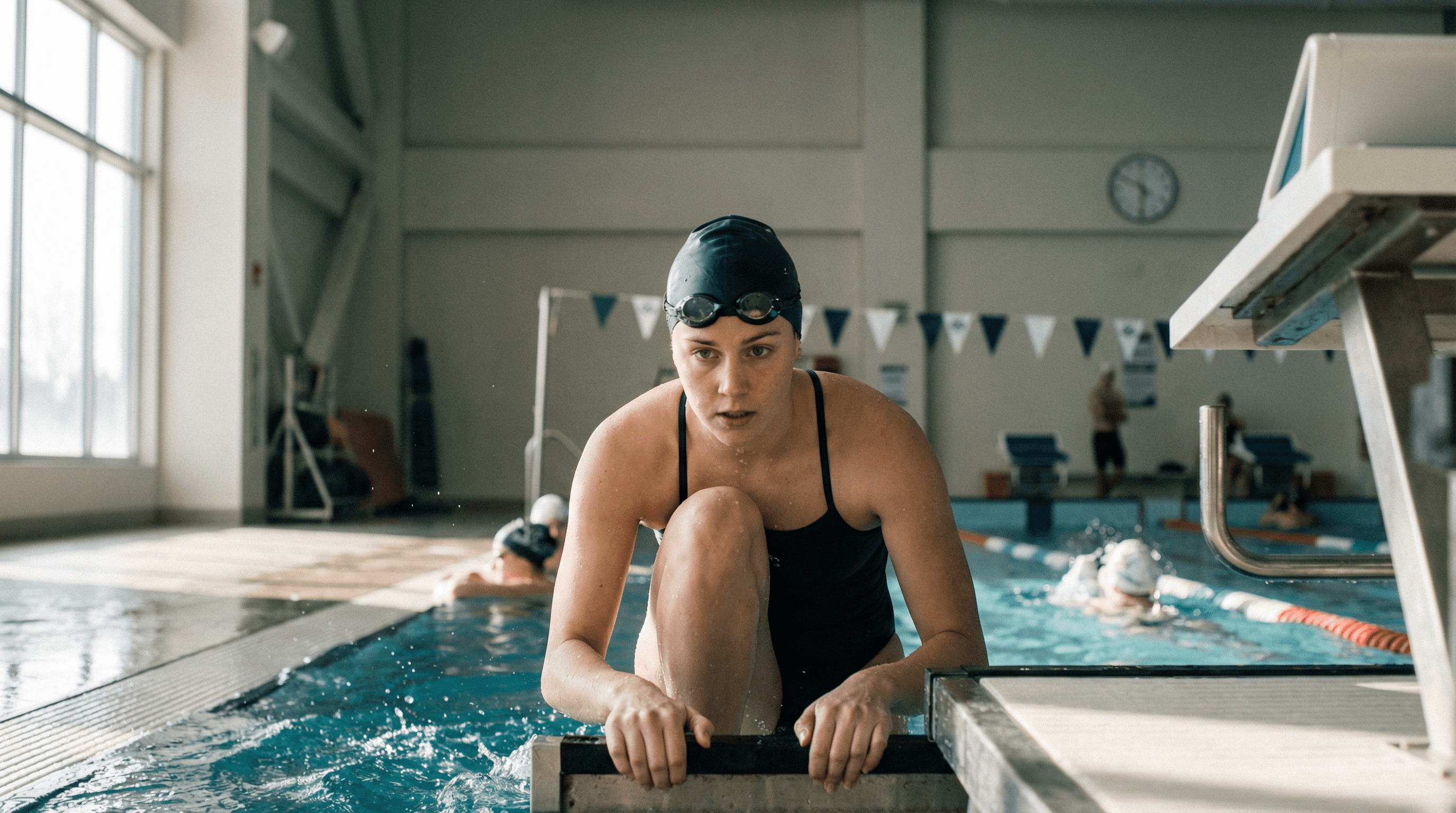
When Katie Ledecky set a new 1500m freestyle world record, casual observers saw raw speed. Scientists saw something more complex: stroke efficiency, biomechanical advantage, and statistical significance that went beyond simple pace calculations. Swimming records comparison requires looking beyond the stopwatch to understand what truly separates elite performances from merely fast ones.
The problem with pace-only analysis is that it treats swimming like a straight line—but water doesn't work that way. A swimmer who completes 100 meters in 50 seconds might achieve that time through radically different approaches: explosive starts with gradual fadeout, or conservative beginnings with crushing finishes. Research in swimming performance analysis shows that factors like stroke rate, distance per stroke, and turn efficiency can account for performance differences even when final times appear close. Consider it like comparing two cars that complete a lap in identical times—one might achieve it through superior acceleration, the other through better cornering. Similarly, understanding how records differ requires examining the underlying mechanics, not just the final number on the clock. The following sections will equip you with the analytical framework to dissect performances like a sports scientist, starting with what you need to know before diving into the data.
Prerequisites: What You Need to Know Before You Start
Before you can properly compare swim times, you need to gather specific information about each performance. Start with the basics: distance, stroke, and whether the pool was long course (50m) or short course (25m). According to research on swimming performance analysis, pool length significantly impacts times due to additional turns in shorter pools.
You'll also need the swimmer's age, gender, and competitive level when the record occurred. A 15-year-old's record requires different analysis than a 25-year-old's—physiological factors like muscle development and hormonal profiles shift dramatically with age. Finally, note the competition type and timing technology used. Modern swimming science shows that electronic timing systems versus manual timing can introduce discrepancies of up to 0.3 seconds.
Without these foundational details, any comparison becomes scientifically limited. Once you have this baseline data, you can begin examining the performance metrics that reveal what really separates good swims from record-breaking ones.
Step 1: Understanding Key Metrics Beyond Pace
When conducting swimming world records analysis, pace alone tells only part of the story. Elite swimmers optimize multiple performance dimensions simultaneously, and comparing records requires examining the underlying mechanics that produce speed.
Stroke efficiency stands as your first critical metric. Measured as Distance Per Stroke (DPS), this reveals how much forward movement each stroke cycle generates. A swimmer covering 2.5 meters per stroke at the same pace as someone achieving 2.0 meters demonstrates superior technique—they're working smarter, not just harder. This efficiency becomes particularly important over longer distances where fatigue magnifies technical flaws.
Underwater performance separates good swimmers from world-record holders. The analysis of elite swimming techniques shows that starts, turns, and finishes account for substantial time differences between competitors. Studies indicate that underwater distance and velocity off walls can differ by several meters between elite athletes, translating to multiple seconds over a full race.
Stroke rate variability matters too. Rather than maintaining constant tempo throughout a race, top swimmers strategically adjust their strokes-per-minute based on race phase. They might accelerate turnover during the final 50 meters while maintaining DPS—a sign of superior conditioning.
For practical analysis, monitor these metrics automatically to compare performances objectively rather than relying on final times alone.
How Stroke Rate Affects Performance
Stroke rate—the number of stroke cycles per minute—directly influences both speed and efficiency in any swim pace analysis. A higher stroke rate doesn't automatically mean faster swimming; elite swimmers balance cadence with distance per stroke to optimize propulsion. When comparing two records, examine whether one swimmer achieved their time through rapid turnover (70+ strokes per minute) or fewer, more powerful strokes (55-65 strokes per minute).
The relationship between stroke rate and velocity follows a predictable pattern: as fatigue sets in during longer races, stroke rate typically drops while stroke length also decreases. A swimmer maintaining consistent stroke rate throughout a race demonstrates superior conditioning compared to one whose cadence decays in the final 25%. Compare the rate stability between performances—consistent rhythm often reveals better technique and endurance, particularly in events over 200 meters where pacing strategy becomes crucial.
The Role of Stroke Length in Swimming
Stroke length—the distance traveled per stroke cycle—fundamentally shapes swimming efficiency and directly impacts swimming performance metrics. While increasing stroke rate boosts speed, doing so at the expense of stroke length often creates diminishing returns. The most efficient swimmers maximize distance per stroke while maintaining an optimal cadence.
Research on world record performances reveals that elite athletes often extend their stroke length by 5-10% compared to national-level competitors at similar speeds. This efficiency gain allows them to sustain faster paces with less energy expenditure—a critical advantage in longer races.
To calculate stroke length, divide the race distance by total stroke count. A 50-meter freestyle completed in 40 strokes yields 1.25 meters per stroke. When comparing records, assess whether one swimmer achieved their time through longer, more efficient strokes or higher stroke frequency. The former typically indicates superior technique and better potential for sustained performance across distances.
However, stroke length optimization varies by event and body type. Sprint specialists may prioritize explosive power over maximum reach, while distance swimmers emphasize efficiency. Context matters—a shorter stroke length isn't inherently inferior if it enables a sustainable rhythm for the race duration.
Step 2: Analyzing Environmental and Biomechanical Factors
Environmental conditions dramatically alter swimming performance beyond what pace alone reveals. Pool temperature, water depth, and altitude all influence resistance and oxygen availability. A record set in a 50-meter outdoor pool faces different challenges than one achieved in a climate-controlled indoor facility with optimal lane configurations.
Starting blocks and turning techniques represent critical record breaking factors that separate elite performances. Research shows that starts and turns can account for up to 30% of total race time in sprint events. Modern block designs with adjustable footrests and backstroke ledges provide mechanical advantages that didn't exist when older records were established. Similarly, underwater dolphin kicks off walls—now a refined science—contribute significantly to overall speed.
Suit technology creates another layer of complexity. Post-2010 regulations standardized fabric thickness and coverage, but records set during the 2008-2009 "super-suit era" still stand in some events. These polyurethane suits reduced drag by up to 10% compared to current textile versions, making direct comparisons problematic.
When analyzing records, document the specific environmental setup and technological context. A slightly slower time under stricter conditions might actually represent superior swimming ability. This contextual analysis reveals what pace numbers alone cannot show.
Impact of Water Resistance and Drag
Drag in swimming accounts for approximately 90% of the resistive forces swimmers must overcome, making it the single most critical factor beyond raw pace when comparing records. Water is roughly 800 times denser than air, meaning even minor improvements in body position or technique can dramatically alter performance outcomes.
Three primary drag forces affect swimmers differently: form drag (resistance from body shape and position), wave drag (generated by surface disturbance), and friction drag (skin-to-water contact). According to research on competitive swimming performance, these forces increase exponentially with velocity—doubling speed requires overcoming roughly four times the resistance.
When evaluating records, swimmers who maintain a horizontal body alignment reduce form drag by 20-30% compared to those with dropped hips or elevated heads. A record achieved with optimal streamlining represents fundamentally superior technique, even if pace appears only marginally faster. Additionally, suit technology and body hair removal can reduce friction drag by 4-10%, meaning records set under different equipment regulations aren't strictly comparable without adjustment.
Biomechanical Considerations for Swimmers
Stroke mechanics reveal performance differences that pace alone masks entirely. Two swimmers completing 100m in identical times might achieve that result through radically different movement patterns—one relying on efficient technique, the other compensating through brute force. This distinction matters profoundly when comparing records.
Stroke rate (cycles per minute) and stroke length form the fundamental equation of swimming velocity. Elite sprinters often exceed 100 strokes per minute, while distance specialists maintain 60-70 cycles to preserve energy. According to research on elite swimming performance, optimal stroke rate varies by individual anthropometry, with taller swimmers typically achieving speed through longer strokes rather than faster turnover.
Body position and streamlining create measurable differences in drag coefficient. A swimmer maintaining horizontal alignment with minimal vertical oscillation faces approximately 25% less resistance than one with poor positioning. Hip drop, head position, and kick efficiency all contribute to overall hydrodynamic profile—factors invisible in split times but critical for understanding sustainable performance.
The relationship between force application and propulsion efficiency determines energy cost. Swimmers who apply force perpendicular to their direction of travel waste significant effort, while those optimizing hand path geometry convert more power into forward motion.
Step 3: Integrating Physiological Metrics into the Comparison
While pace and biomechanics provide the foundation, physiological metrics reveal the internal cost of performance—the unseen effort behind each record. Two swimmers matching pace might operate at entirely different physiological intensities, affecting sustainability, training adaptations, and comparative difficulty.
Lactate threshold serves as a critical marker. Research demonstrates that elite swimmers maintain remarkably different blood lactate concentrations at equivalent speeds. A swimmer holding 1:05/100m at 4 mmol/L lactate works more efficiently than one reaching 8 mmol/L at the same pace—the former operates aerobically while the latter relies heavily on anaerobic glycolysis.
VO2 kinetics matter equally. Faster oxygen uptake response means quicker energy system activation and reduced oxygen deficit. In practice, swimmers with rapid VO2 kinetics handle pace changes more effectively, particularly during starts and turns where metabolic demands spike dramatically.
Stroke rate-to-pace ratio indirectly reflects metabolic efficiency. However, higher stroke rates typically correlate with elevated heart rate and energy expenditure. Understanding whether a record resulted from exceptional aerobic capacity or superior mechanical efficiency fundamentally changes how we evaluate its achievement—and leads naturally into examining heart rate patterns that quantify these intensity differences.
How Heart Rate Reflects Swimming Intensity
Heart rate serves as a window into the cardiovascular demands each swimmer faces during their record attempt. Two identical finishing times can represent vastly different physiological costs depending on each athlete's heart rate response throughout the race.
Elite swimmers typically maintain 80-95% of maximum heart rate during competitive events, but this range varies significantly based on distance and individual conditioning. A swimmer holding 92% max heart rate for a 100m sprint demonstrates different efficiency than another reaching 96% for the same time—the latter operates closer to physiological limits, suggesting less room for improvement.
Heart rate recovery patterns reveal sustainability. A swimmer whose heart rate drops 40 beats per minute within the first minute post-race demonstrates superior cardiovascular fitness compared to one showing only a 20-beat drop. This recovery metric indicates how efficiently the body transitions from intense effort to rest, which correlates with training adaptation and overall conditioning level.
In practice, comparing heart rate zones across different distances provides insight into metabolic efficiency. Sprint events push swimmers into maximum zones briefly, while distance races demand sustained threshold work—understanding where each athlete operates within their personal zones clarifies the true intensity behind their performance numbers.
Energy Expenditure and Recovery: What to Consider
Energy expenditure reveals the metabolic cost behind each performance—how efficiently swimmers convert biological fuel into forward motion. Two records might show identical times, yet one athlete may achieve this through superior energy economy while the other relies on sheer power output.
Consider the swimmer's stroke rate and stroke length relationship. A higher stroke rate typically demands greater energy expenditure, while longer, more efficient strokes reduce metabolic cost. Research on elite swimming performance shows that optimal stroke efficiency varies significantly based on distance, with sprint records displaying markedly different energy patterns than distance events.
Recovery capacity between intervals provides another lens for comparison. In multi-lap records, examine how lactate accumulation affects performance degradation. One swimmer might maintain consistent splits through superior lactate buffering, while another shows progressive slowing—both finishing with the same time but demonstrating vastly different physiological profiles.
This metabolic context helps answer: Which record required greater physical resilience? The answer often challenges assumptions about which performance was truly more impressive.
When This Approach Isn't the Right Fit
Scientific comparison isn't always practical or necessary for evaluating swimming performance. When swimmers compete in the same race under identical conditions—same pool temperature, same timing system, same starting blocks—pace alone tells the story effectively. The environmental variables cancel out, making deeper analysis redundant.
This methodology also struggles with incomplete data. If you can't access stroke count information, turn times, or heart rate metrics, you're left building conclusions on shaky foundations. Statistical analysis of world records requires robust datasets; without them, your comparisons become guesswork rather than science.
Recreational swimmers making casual performance comparisons don't need this level of rigor either. A neighborhood pool record versus an Olympic qualifier? The context alone explains the performance gap better than any metabolic calculation could. Save the scientific approach for scenarios where the comparison actually matters—when understanding why someone swam faster helps inform training decisions, equipment choices, or competition strategies. That's when these metrics transform from academic exercise into practical coaching tools.
Example Scenarios: Applying the Metrics
Context determines which metrics matter most for meaningful performance comparison. A sprint race demands different analytical focus than an endurance event, while comparing across eras requires accounting for technological advantages.
Example scenario: Comparing two 100m freestyle records from different decades. Beyond pace, evaluate reaction times using start performance data to identify technical advantages at the blocks. Check stroke count for efficiency differences—fewer strokes typically indicate superior distance per stroke. Factor in turn times, which can represent 30% of race time in short-course pools. Consider thesuit technology era; records from 2008-2009 should include a caveat about performance-enhancing suits.
For distance events, shift focus toward pacing strategy and negative split capability. A 1500m record with consistent 100m splits might indicate better energy management than one with aggressive early pacing followed by fadeout. Stroke rate consistency across the race reveals fatigue resistance—elite distance swimmers maintain cadence better than competitors who slow significantly in the final laps.
This analytical framework turns raw times into performance narratives—revealing not just who was fastest, but how they achieved that speed and what those differences mean for the sport's evolution.
Key Swimming Records Comparison Takeaways
Scientific swimming comparison requires multi-dimensional analysis beyond simple pace calculations. While average speed provides a baseline understanding, the complete performance picture emerges only when you examine stroke mechanics, environmental conditions, turn efficiency, and psychological factors together. The most valuable insight from competitive swimming analysis is that context dictates which metrics are most important. Sprint races demand split-second turn efficiency and explosive starts, while distance events reveal endurance capacity through consistent pacing. Pool depth, water temperature, and competition era all significantly influence performance—factors that raw time alone can't capture.
Moving forward, apply this framework systematically: start with pace to establish the baseline, then layer in environmental adjustments, analyze technical execution, and consider competitive context. This approach transforms swimming comparison from subjective opinion into data-driven evaluation, helping you identify true performance excellence regardless of when or where records were set.